
If you’ve ever wondered how traditional Indian wrestlers built massive shoulder, arm and grip strength, look no further than the humble yet powerful Mudgar (also often called Indian clubs or “mugdar”). In this post we’ll explore its fascinating history, its benefits, how to use it today – and help you choose the right weight (3 kg for women starting out, 5 kg for men or more experienced users) with some solid product picks.
1. The Origins & History
The mudgar has deep roots in South Asia and Persia, evolving from a training tool for warriors and wrestlers into an accessible fitness accessory today.
Ancient beginnings
- The term “mudgar” (or “mugdar”) in India refers to a type of mace-like club, traditionally made of wood (sometimes iron) and used as both a weapon and a strength trainer.
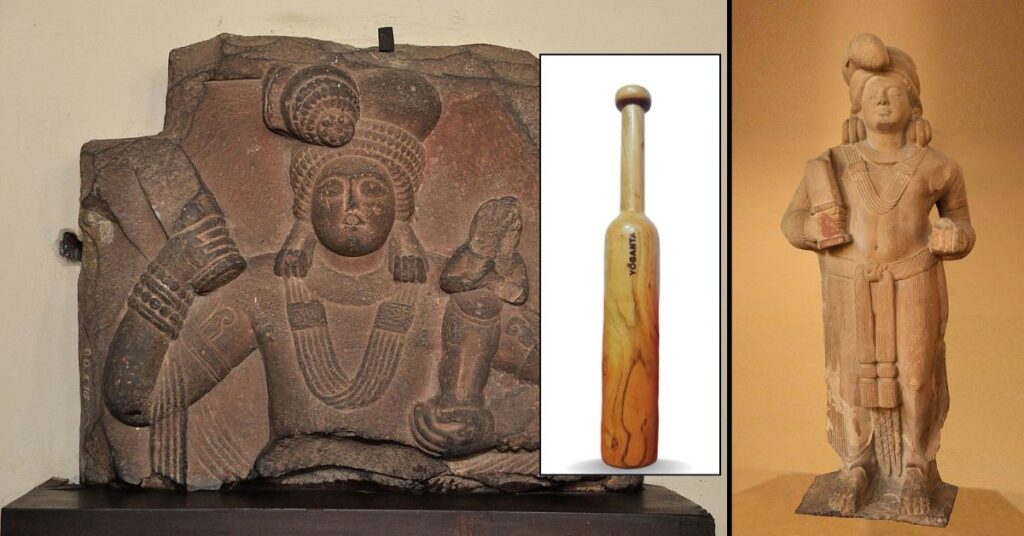
- Academic sources point out that such clubs appear in ancient Indian sculptures, held by Yaksha deities, indicating their cultural significance.
- In Persia, a similar tool called the “meel” was used in the Zurkhaneh (traditional Persian gym) for the strength and conditioning of warriors.
Colonial diffusion & Western adoption
- When British colonists and European travellers came to India, they observed native wrestlers and exercising traditions using wooden clubs. These observations helped spread the “Indian club” to Europe and America during the 19th century.
- In fact, the Indian club movement was so popular in early physical culture that it was part of early Olympic gymnastics events.
Decline & resurgence
- Over time, as modern gym machines and weights became dominant, the mudgar/traditional club-swinging lost widespread popularity.
- Recently, however, fitness enthusiasts in India and abroad are revisiting traditional tools like the mudgar –recognizing their unique benefits for mobility, coordination, and functional strength.
2. Why Use a Mudgar? What are the Benefits?
Using a mudgar is more than just swinging wood around – it offers several advantages, especially for upper-body strength, shoulder health and coordination.
Shoulder & upper-body strength
Because mudgars are swung, rotated and moved in multi-plane patterns, they engage the entire upper body – shoulders, arms, back, forearms – in a way that differs from standard dumbbell lifts.
Joint mobility and shoulder health
The circular, swinging movements help maintain and improve joint mobility – especially in the shoulders, elbows and wrists – which is valuable both for athletes and those with sedentary desk jobs.
Grip and forearm development
Because the club’s weight is distributed away from the handle (long lever), holding and controlling the swing forces a strong grip and forearm activation.
Core stability, coordination & functional movement
Mudgar exercises are dynamic: you are not just lifting weight but controlling momentum, stabilising your body, coordinating arm, core and leg action – this trains real-world movement patterns more than fixed machine lifts.
Versatility & accessibility
One of the beauties of a mudgar is its relatively simple design and its ability to be used at home or in small spaces. For anyone wanting a traditional, effective tool without bulky machines, this is a strong candidate.
3. Choosing the Right Mudgar & Getting Started
Before diving into routines, it’s important to pick the right weight and size – because using too heavy a club too soon can mean poor form or injury.
Recommended weights: 3 kg & 5 kg
- 3 kg version (for women / beginners): A 3 kg club is a great starting point for women, or for any beginner regardless of gender. It allows you to learn the movements, build technique, joint mobility and coordination before increasing load.
- 5 kg version (for men / intermediate users): A 5 kg club is best suited for those who already have some upper-body strength, and who want to challenge themselves more. Men starting out might begin here – or begin at 3 kg and progress to 5 kg.
Using a club that is too heavy from the start can compromise form (swing too fast, control lost) and reduce the intended benefit.
What to look for in a quality mudgar
- Material: Traditional wooden clubs are great; ensure good finish, no rough edges, secure handle.
- Weight accuracy: The club should genuinely weigh what it claims.
- Grip & handle: Comfort and security matter if you’ll swing it.
- Size/length: Not too long for your arm span and ceiling height (if indoor).
- Clear instructions: If you’re new, look for tutorials or guidance on safe use.
Safety & technique tips
- Always warm up shoulders, arms and wrists before using the mudgar.
- Begin with slow, controlled movements: learn the pattern first, then gradually increase speed or reps.
- Avoid swinging in cramped spaces or near fragile objects – because the club travels outside your immediate body.
- Focus on control, not just momentum. The benefit comes from the body resisting and controlling the swing.
- Progress gradually: once comfortable at one weight/variation, move up or increase complexity (one-arm swings, more rotations etc.).
- If you have shoulder or wrist issues, consult a trainer or physiotherapist before adding heavy swinging movements.
4. Sample Routine to Get You Started
Here’s a simple routine you can try (once you have your mudgar) to familiarise yourself with the tool and build confidence. Use the 3 kg version if you’re new, or the 5 kg if more experienced.
| Exercise | Sets × Reps | Description |
|---|---|---|
| Two-hand overhead swing | 3 × 10 | Hold the club with both hands overhead, then swing it behind you and control it back overhead. |
| Two-hand lateral swing | 3 × 8 each side | Swing from one side to the other, passing the club in front of your body, working rotational core and shoulders. |
| One-arm front swing | 3 × 6 each arm | Use one arm only, swinging forward then up over your head, control the return. Builds unilateral strength & stability. |
| Behind-back swing (if comfortable) | 2 × 8 | Swing the club behind your back (two-handed) – advanced move, requires space and good shoulder mobility. |
Notes: Start slow, rest 60-90 seconds between sets. Focus on smooth motion, avoid jerky swings. As you become comfortable, increase reps, vary directions and eventually increase weight.
5. Product Recommendations (Affiliate Links)
Here are some solid mudgar options available on Amazon.
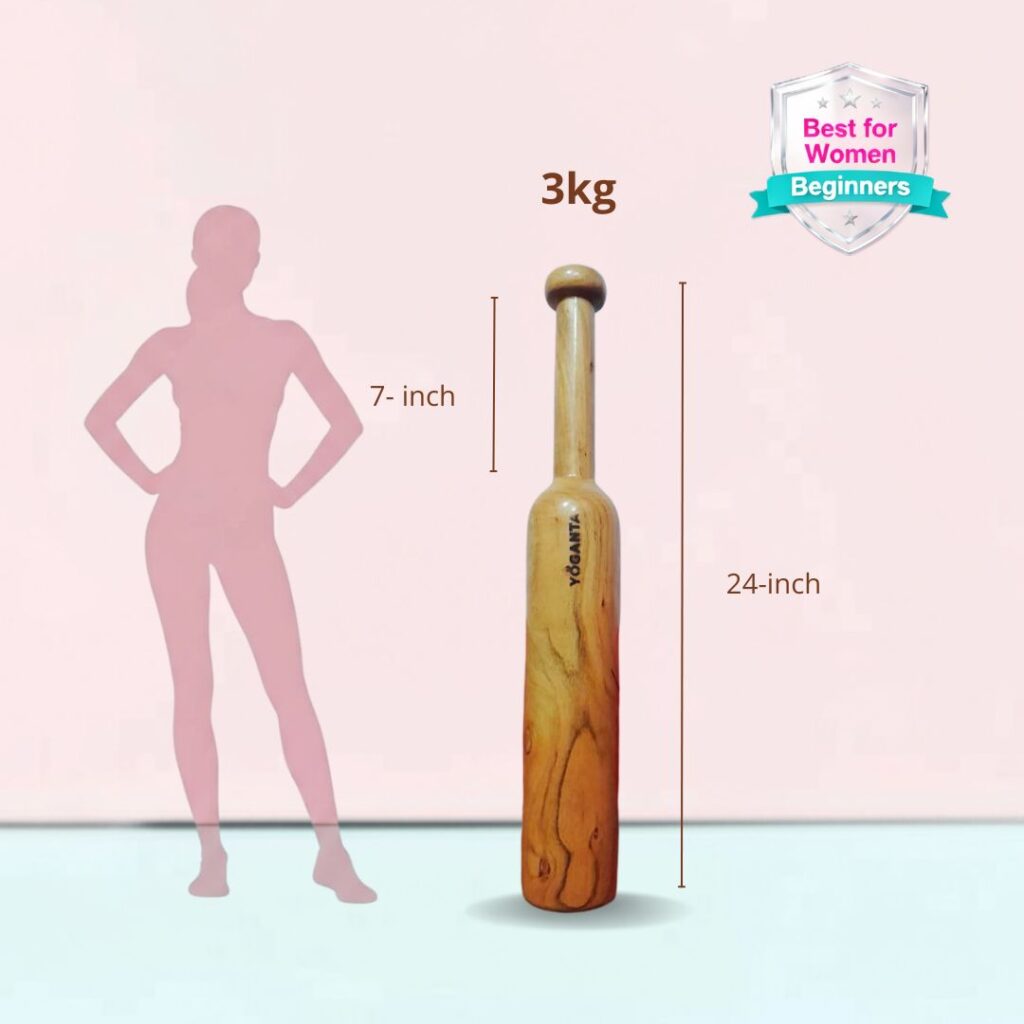
Yoganta 3 kg Wooden Mudgar (Indian Club)
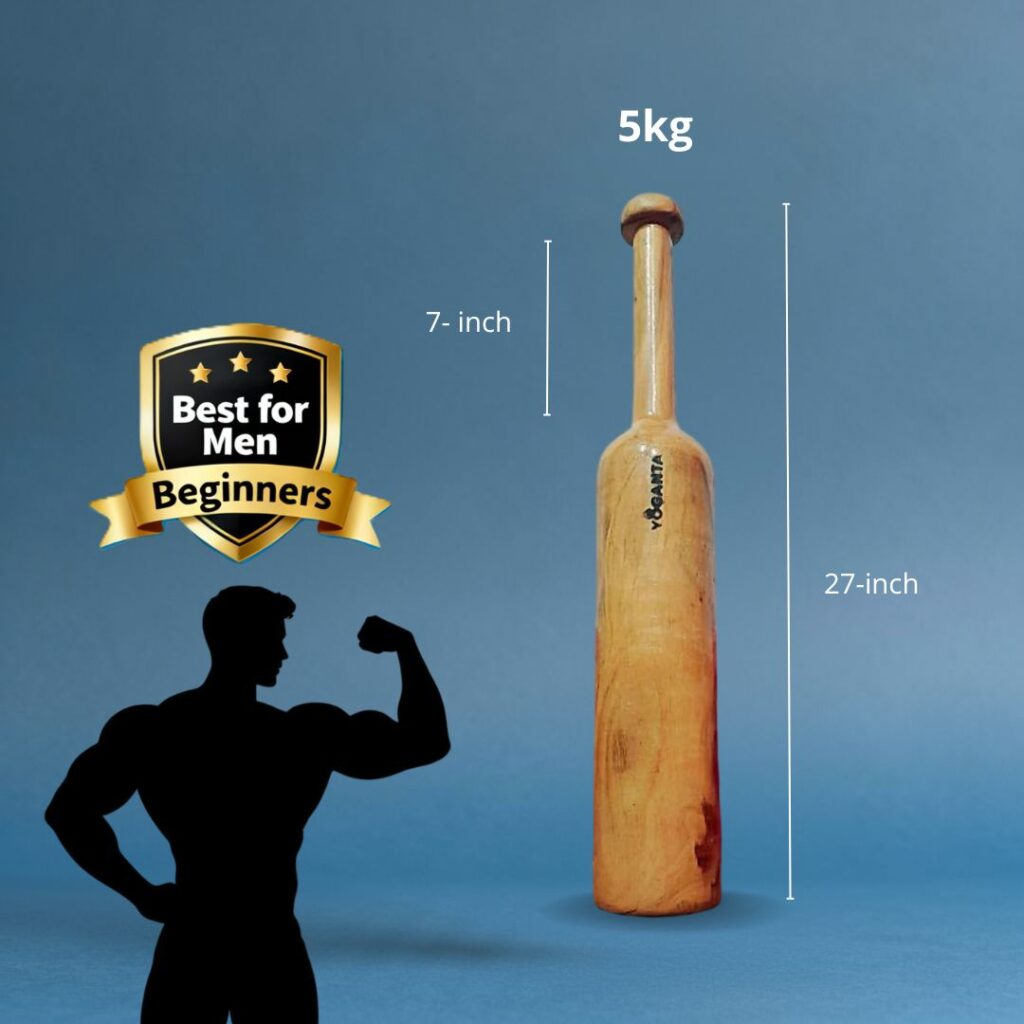
Yoganta 5kg Mudgar is best for men to start
6. Integrating Mudgar into Your Regular Routine
Rather than treating the mudgar as a one-off tool, you’ll get the best results by blending it into your regular training. Here are a few ideas:
- Warm-up alternative: Use 5-10 minutes of mudgar swings before your main workout to activate shoulders, wrists, core and improve mobility.
- Active recovery / mobility day: On lighter days, use mudgar for coordination and flow work (slow, smooth swings) rather than heavy strength.
- Standalone session: Dedicate one day a week to “traditional tools” – mudgar, kettlebells, bodyweight circuits — to supplement your usual training.
- Progression tracking: As you get comfortable with your current weight (3 kg or 5 kg), consider increasing reps, changing direction of swings, or moving to heavier clubs (if safe) for ongoing challenge.
7. Final Thoughts
The mudgar is more than a retro training tool – it’s a connection to centuries-old strength traditions, offering functional, dynamic movement that complements modern fitness. Whether you’re starting out (3 kg club) or ready to challenge yourself (5 kg club), this simple piece of equipment can add variety, mobility and strength to your workout.
If you’re looking for something unique – yet effective – consider adding a mudgar to your home workout arsenal. Combine respect for its tradition with modern training sense, and you’ll not only feel the power building, you’ll appreciate the history behind it.
Note: Always consult with a fitness professional if you have any shoulder, wrist or back conditions before using swinging clubs. Use caution, practise control first, and enjoy the journey of discovering a traditional tool with modern relevance.